DOT Drug Testing
Federal-procedurecollections,done at your yard.
Gentle Draw performs DOT specimen collections for regulated employers across Union City and the south metro Atlanta area — at the workplace or a location that works for the crew, following the federal Department of Transportation collection procedures, so the result stands up.
- All six DOT collection types
- ·
- Chain of custody at the visit
- ·
- Employers & staffing agencies
Regulated employers
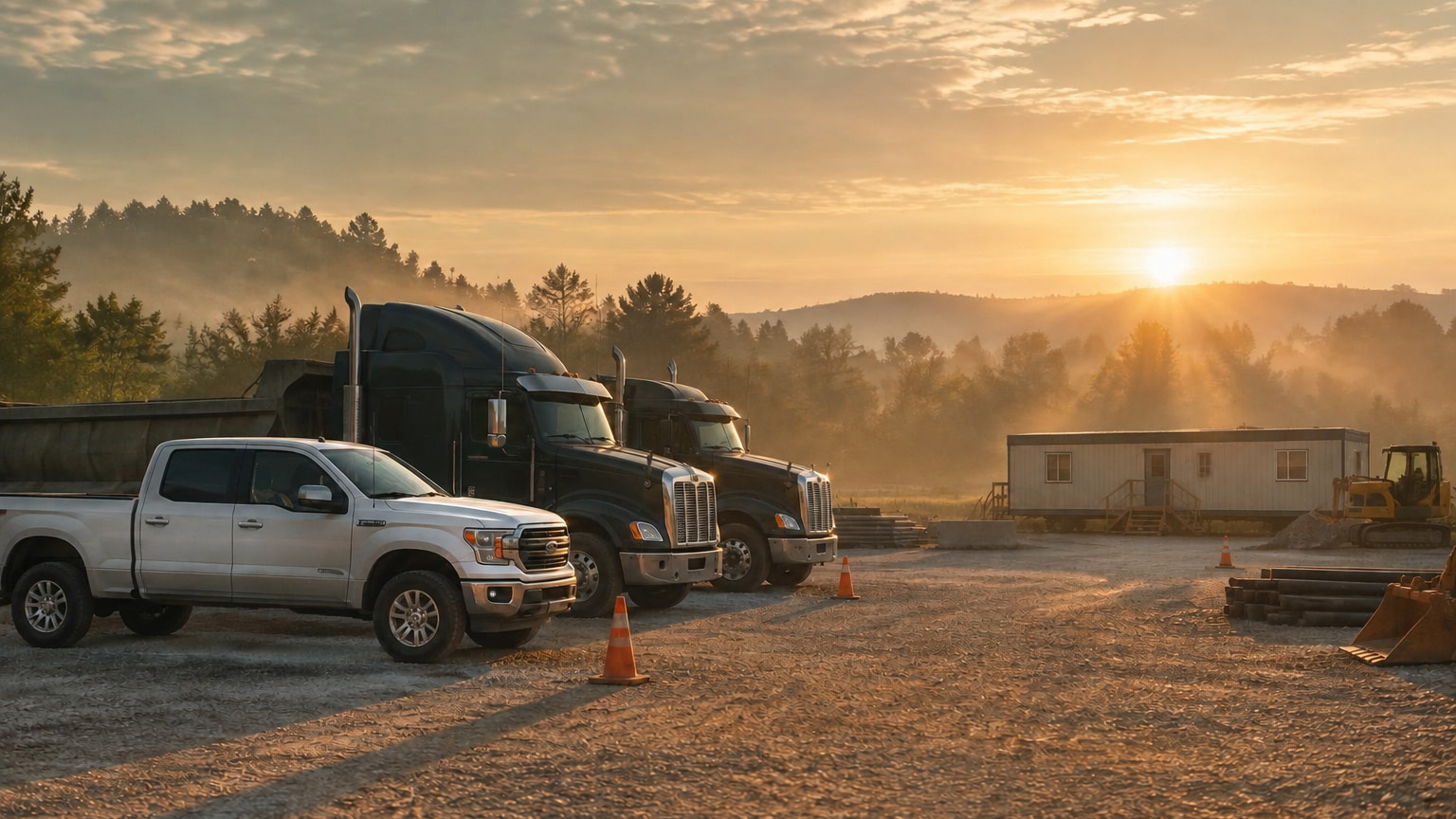
Trucking, transit, construction, logistics, pipeline, aviation and maritime.
What DOT testing means for you
A regulated collection is nota cup and a form.
When a test falls under the Department of Transportation, the collection itself is part of the record. It has to be performed the way the federal procedures say, by someone who follows them, with the chain of custody completed correctly at the moment of collection. Get that wrong and a result your program needs can be thrown out — and the driver has to be collected again.
So we collect to that standard: the right specimen type, sealed in front of the donor, documented on the custody form as it happens, packaged for the laboratory your program designates. Whether it happens at your yard, your office, or a location that suits the crew, the procedure is the same.
Plainly: we perform the collection. We do not run the laboratory analysis and we do not perform the medical review officer’s review. Those are handled by the certified lab and the MRO your program uses.
The six situations
Every DOT collection type, in plain words.
Tell us which of these each person needs. If a visit mixes them — three pre-employment and one post-accident, say — that is normal, and it is one trip.
Pre-employment
A collection for a candidate who has been offered a safety-sensitive position, before they start driving or working. We go to your yard, your office, or a spot that is easier for them to reach.
Random
Collections for the names your random selection pulls. Send us the list and the window and we will work through it — at the site, on the shift it falls on.
Post-accident
When an accident triggers a test under your program, timing is the whole point. Call us and say so; getting a collector to the site promptly is the priority.
Reasonable suspicion
A collection when a trained supervisor has documented specific, observable signs. Handled quietly, with no audience and no commentary in the parking lot.
Return-to-duty
The collection that follows a program’s return-to-duty process, so a driver can be cleared to come back to safety-sensitive work.
Follow-up
The scheduled collections a program requires after a return to duty. We can keep the cadence and take the scheduling off your desk.
Where our job ends
Who does what, so nothing is overpromised.
A DOT test has three parties in it: the collector, the laboratory, and the medical review officer. We are the first one. Here is the line, drawn clearly.
Gentle Draw performs
The collection
- Specimen collection performed following the federal Department of Transportation collection procedures.
- The correct specimen types for the panel your program ordered, collected in the order and manner the procedure requires.
- Chain of custody completed at the time of collection, with every seal, initial, and date where it belongs.
- The split specimen sealed and handled as the procedure requires, so a retest is possible if it is ever needed.
- Specimens packaged and prepared for shipment to the laboratory your program designates.
- The copies of the paperwork that belong to you and to the donor, handed over before we leave.
Your lab and MRO handle
The analysis and the review
- The laboratory analysis of the specimen, at the certified laboratory your program uses.
- The medical review officer’s review of the result, and the MRO’s conversation with the donor where one is required.
- The verified result reported back to your designated employer representative.
- Any decision about the donor’s employment. That is yours, and it stays with you.
We do not issue results, we do not report a pass or a fail, and we do not perform the MRO review. If your program does not yet have a laboratory or an MRO, tell us on the call and we will say plainly what we can and cannot do.
Specimen types
What gets collected.
Urine
The standard DOT specimen. Collected as a split specimen, sealed in front of the donor, and documented on the custody form.
Oral fluid
Collected where the employer’s DOT program allows oral fluid testing. Tell us if your program is set up for it and we will collect to that method.
Breath alcohol
Where your program requires alcohol testing alongside the drug test, we will confirm what the visit needs to include before we schedule it.
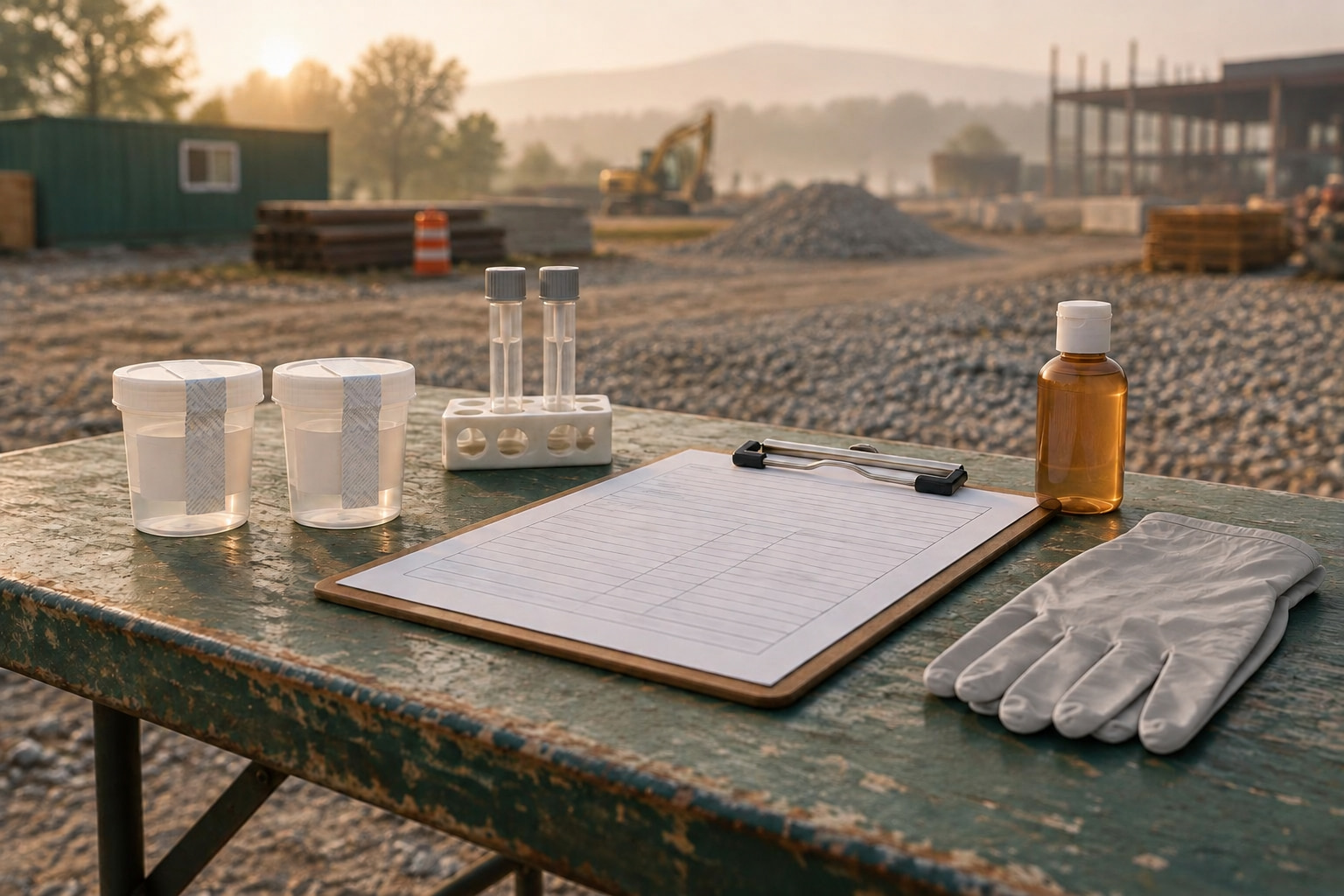
Everything the collection needs arrives with the collector.
Who needs it
The employers who call us.
If your people hold a commercial license, move freight, or work a safety-sensitive job under a federal program, DOT testing is usually not optional. These are the trades we collect for.
Trucking & CDL drivers
Interstate and intrastate carriers, owner-operators, and anyone running a regulated commercial motor vehicle.
Bus & transit operators
Motorcoach, charter, school bus, and transit agencies with safety-sensitive drivers and mechanics.
Freight, logistics & warehousing
Cross-docks, distribution centers, and third-party logistics teams moving freight on the road.
Construction & excavation
Firms running dump trucks, flatbeds, service bodies, and commercial equipment that puts a CDL in the seat.
Pipeline & utility contractors
Crews working pipeline, gas, electric, and water infrastructure under regulated programs.
Aviation & maritime employers
Operators with safety-sensitive employees covered by FAA or USCG testing requirements.
Not on the list but running a regulated program? Call 404-819-8480 and ask.
What to expect
Five steps, from your call to your paperwork.
- 01
You call or send the form
Tell us the site, roughly how many people, which of the six collection types each one needs, and the deadline you are working against.
- 02
We schedule around the crew
We build the visit around a shift change, a morning start, or a window that keeps a truck from sitting. You get a confirmed time, not a maybe.
- 03
The collector arrives on site
We come to your yard, office, or terminal with the supplies the collection needs, and set up somewhere private.
- 04
The collection is performed and documented
Specimens are collected to the DOT procedure, sealed, and recorded on the custody form while the donor is present.
- 05
You get the paperwork
Your copies are handed over at the visit and the specimens go to the laboratory your program uses. From there the lab and the MRO carry it.
What to have ready when we arrive
- The authorization or order your program requires for each person.
- Photo ID for each donor.
- A private room, a restroom, and a place to set up.
- The name and address of the laboratory your program uses.
DOT testing request
Tell us the siteand the deadline.
The form below comes in already marked for DOT testing, so your request lands labeled correctly. Add how many people and which collection types — or call and we will sort it out in a two-minute conversation.
Need a non-regulated workplace test instead?
The same on-site collection, ordered under your own company policy rather than a federal program — plus court-ordered and personal testing for individuals.